Territorial Boundaries
See the way we pocket our sadness. Dress
in isolation. Keep the lights on. We can see
what’s coming for us.
Cars. Cable bills. The man who enters
without keys.
It’s a hustle for meaning,
odd mating dance of money. Whiskeys threatened
for $9 dollars apiece.
At night we throw back
the sunrise of civilization,
Smell the first lemony green hops crushed
against granite. First grain rolled into bread.
It was a mistake, wasn’t it?
How we separated our families
by bricks, our love by wallets.
Now the birds sing
the same warbles and whistles
they’ve passed down since sunlight
started them blazing.
But our ears have changed.
Is this why we affix
heads of animals on gods,
carve wings onto the backs of angels
tattoo ourselves with feathers?
To remind us how easy we were
as animals. Everything built inside our bodies.
Claws. Sinew, a warning signal attuned
to someone else’s hunger.
We wanted nothing
but days nursing
on rain.
Today deer still circle the forest.
They live in an abundance
of silence, sleeping on the wet
of winter, fur ignited by snow.
Not even waiting
for a thaw.
The Basket of the Sky Gluts Itself on Stars
No matter how fast the city grows,
darkness takes us back to our place
Each constellation a collection of seeds,
gloamed around the root of its growling.
I lucubrate listening
to the nocturnes and the benighted sounds of moths alighting
among night-dwelling animals.
Lions roost near Cassiopeia. Poets follow the feet of the bear.
Now a comet flings itself from the collision with daylight.
The hubcap of a Chevy breaks from a junkyard of promises.
Once we were spotted
wild ponies spattered with silver, toughening its hair.
When I look at you, a privacy,
like the privacy of first people.
God hadn’t found us yet.
We plucked our light out of a river.
Then the moon appeared, a lantern lifted.
Stars raised their cold mouths
to howl at us, the blue-green animal
scratching its scent into the dangerous sky.
When the Moon Had Antlers
Moss glowed on rock.
The hunter moon hung
its horn from a cloud.
Men rose
from the rivers. Green.
On the banks the stag muddied its antlers.
We drank with ripple-shine, star-gardens,
workmanship of a knife, turning
stone into fish, fins, faces.
Now we stand
facing the old statues, asking
where have they lead us?
The people we once were.
The artists.
All the gods we animals have made.
Catacombs
This is how we remember
what we love.
Build a city
over it.
Rearrange skulls
into fountains,
bones
into tourist attractions.
We see ourselves ushered
into the underworld.
See the statues
hold still.
Time has transmogrified them
into questions.
Remember the moon
once had antlers,
And loved us so much
she buried
her light
in our bones.
Questions for a Search Engine
If only you could sing me a star song
Like the bards used to do.
Layers of history sediment over. Languages lose themselves.
And under the man-made lake something lurks, lying dormant.
If only you could predict the past
like a Soothsayer. Break open like oracle bones.
On this side of the flowers the tea leaves
Keep falling. Tell me what animal
My grandmother has become
Now she blossoms celestial side.
Tell me why we left the fire unattended.
Why we ochered our hands on walls.
I dream forests walking towards us.
What do these images signify?
Tell me how this star-song ends. Tell me
what was written on the back of their eyes?
Don’t Write
If Trees could speak, they wouldn’t. – Dorianne Laux
Solitude enters the city like a sunken sun.
Sadness of doves silvering the fences.
The day closes its mouth, looks into a lake.
Shadows have come all this way to curl onto your chest.
You want to capture something.
Say it back to whatever is breathing this darkness.
But the mouth of the universe will not be filled
By your tiny lexicon.
The trees are silent
Because they are listening.
Something happens in the star gardens above us.
We may never see what blossoms behind us.
Donate your tongue to its unfolding. Become
The flight in the solitude of doves.
The green in the silence of trees.
Ode to the (Current) North Star
All night the North Star governs our lives.
A cosmic light-house
guiding the sailors and the astronauts. Making poets
quiet and thoughtful.
But in 13,000 years the earth will tilt, and we’ll all turn
to birds again, following the tail end of the constellation.
Polaris will lose its importance. The way old ideas
get overthrown and replaced with new hungers.
By then we’ll be long dead. Our body parts recycled into oceans
and water bottles. New generations drinking
our old tears. Still, it feels small and quotidian to be alive.
The way the stars align every night,
making something as ordinary as a belt for Orion, or a dipper
anyone can drink from.
A big bear and a little one pointing
their noses in the direction of the night’s cold pollen.
As if the sun is just one stain of honeycomb, ministering us around and around
as we circle towards something. But who can say what?
When I was younger I expected my life to be sweet, a long lick of the lollypop
of languages and travels, piano music and poetry,
but yesterday the sun set and took with it
a kind of bliss I didn’t know I had. I felt the cold weight of my mortality slide
back and forth, like mercury in a thermometer.
Did anyone ask the dinosaurs if they were ready to die?
The stars if they wanted to become bear and black swan?
The mastodons go extinct. The murder swan loses its claws and becomes just another bird.
Even the North Star, which I thought was constant, will become a lie.
And we’ll have to reinvent our stories again,
little lost cygnets
looking at the tail end of a featherless star.
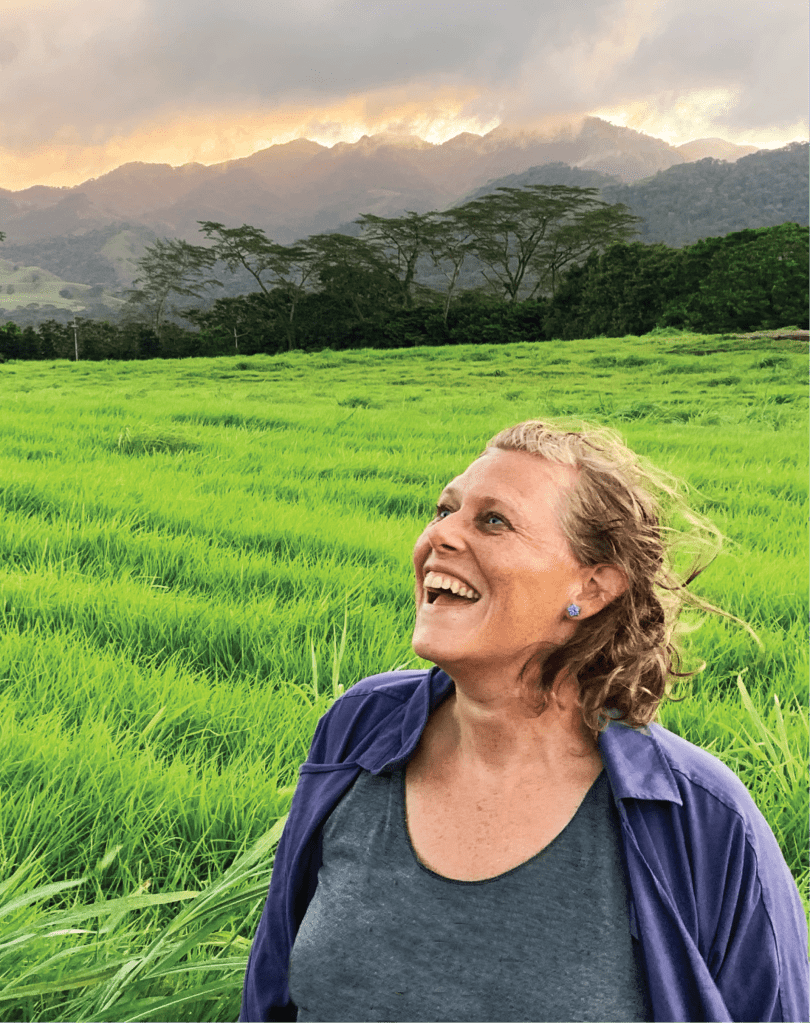
Tresha Faye Haefner’s poetry appears, or is forthcoming in several journals and magazines, most notably Blood Lotus, Blue Mesa Review, The Cincinnati Review, Five South, Hunger Mountain, Mid-America Review, Pirene’s Fountain, Poet Lore, Prairie Schooner, Radar, Rattle, TinderBox and Up the Staircase Quarterly. Her work has garnered several accolades, including the 2011 Robert and Adele Schiff Poetry Prize, and a 2012, 2020, and 2021 nomination for a Pushcart. Her first manuscript, “Pleasures of the Bear” was a finalist for prizes from both Moon City Press and Glass Lyre Press. It is still looking for a publisher. Find her at www.thepoetrysalon.com.
Note: “Territorial Boundaries” was previously published by River Heron Review
 the poet's billow